Introduction
The MTS Cell Proliferation Colorimetric Assay Kit is widely used in cell biology and drug discovery for quantifying cell viability and proliferation. By measuring metabolic activity, this assay can help determine cellular responses to various treatments and environmental conditions. Research institutions, including Harvard University and the National Institutes of Health (NIH), have adopted this assay in studies for understanding cancer growth, toxicity testing, and regenerative medicine.
How the MTS Assay Works
The MTS assay utilizes the metabolic activity of living cells to convert MTS reagent into a colored formazan product, which can be quantitatively measured. Studies at University of California, Berkeley and Yale University have shown that this process relies on mitochondrial activity, which serves as a reliable indicator of cell viability and proliferation.
- Cellular Metabolic Activity: MTS reagent is reduced by cellular enzymes in viable cells to produce a colorimetric change. The Centers for Disease Control and Prevention (CDC) underscores the importance of such metabolic assays in toxicity and drug discovery studies.
- Formazan Production: Formazan generation directly correlates with cell numbers, making it a valuable tool in cellular research. Investigations by Johns Hopkins University demonstrate how this colorimetric change reflects metabolic activity, providing insights into cell viability.
Applications of the MTS Assay in Research and Clinical Studies
The MTS assay is particularly useful for monitoring cell growth, cytotoxicity, and cellular response to therapeutic compounds. Research by the Food and Drug Administration (FDA) and National Cancer Institute (NCI) highlights its relevance in cancer cell research and chemotherapy drug testing.
- Cancer Research: The MTS assay is instrumental in assessing the effectiveness of anti-cancer compounds. Studies from the American Cancer Society (ACS) and National Cancer Institute (NCI) emphasize how it helps researchers quantify cancer cell responses to treatments.
- Toxicology Testing: Toxicology researchers at University of Michigan and National Institute of Environmental Health Sciences (NIEHS) use MTS assays to evaluate the cytotoxic effects of environmental agents on human cells.
- Drug Development: Pharmaceutical studies at University of Pennsylvania and the National Institute on Drug Abuse (NIDA) employ MTS assays to screen compounds for their impact on cell health, aiding in the development of safer, more effective drugs.

Advantages of the MTS Assay
Compared to other assays, the MTS assay provides a quicker, less toxic method for assessing cell viability. The National Institute of General Medical Sciences (NIGMS) highlights the benefits of MTS over traditional assays like MTT, which requires additional steps for solubilization.
- Non-Radioactive: The MTS assay does not require radioactive isotopes, making it safer and more environmentally friendly, as noted by the Environmental Protection Agency (EPA).
- Compatibility with Various Cell Types: Research at University of Washington and Mayo Clinic confirms that the MTS assay is compatible with a wide range of cell types, enhancing its versatility in research.
Protocol and Methodology for MTS Assay
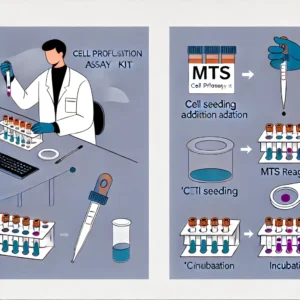
The standardized MTS assay procedure involves several steps: preparing cell cultures, adding the MTS reagent, incubating, and measuring absorbance. The National Institute of Standards and Technology (NIST) provides guidelines for standardizing absorbance measurements to ensure reproducible results.
- Cell Seeding: Accurate cell seeding is critical for assay reproducibility, as confirmed by Stanford University studies.
- Addition of MTS Reagent: The MTS reagent is added directly to cell cultures, requiring no further washing or processing, making it efficient for high-throughput studies.
- Incubation and Absorbance Measurement: Incubation allows the cells to metabolize the reagent, with absorbance measurements taken at 490-500 nm. University of Wisconsin-Madison research recommends optimizing incubation time for different cell types.
Data Analysis and Interpretation
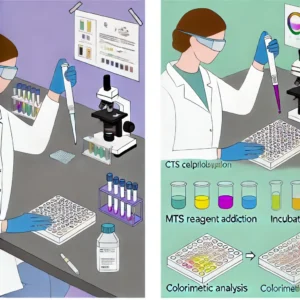
Data from MTS assays are usually analyzed by comparing absorbance values of treated versus untreated cells. University of California, San Francisco (UCSF) and MIT researchers often use MTS results to plot dose-response curves, helping determine IC50 values and drug efficacy.
Current Trends and Future Directions
The MTS assay continues to be refined for greater sensitivity and broader application in fields like stem cell research and regenerative medicine. Studies from Harvard Stem Cell Institute and National Institutes of Health (NIH) indicate potential for the MTS assay in monitoring stem cell viability and differentiation.
Conclusion
The MTS Cell Proliferation Colorimetric Assay Kit provides a reliable, efficient method for assessing cell viability and proliferation. From cancer research to toxicology, it plays an essential role in evaluating cellular health and response to treatments. Supported by advances in assay technology, institutions like University of Chicago and National Center for Biotechnology Information (NCBI) are leading efforts to optimize MTS assays for more precise and diverse applications, ensuring their continued relevance in scientific and clinical research.